
The level of political discourse in the country is generally low, but it touches a nadir during election time. You will hear downright lies, half truths, breathtaking exaggerations, and extravagant promises, but never the truth, says Sherna Gandhy.

The least the Opposition can do, for India's sake, is try to offer one, says Mitali Saran.

The AAP will face the more determined BJP at the next round in Delhi. Sure it would have to counter a Modi-led campaign but hasn't it already weathered that? In the re-poll, AAP would not need to bother much about the decimated Congress, down on both moral and image. All it needs to do is stay the ground till then, says Mahesh Vijapurkar.

'We will do it either by removing all the Constitutional hurdles or by mutual consent.'

'... in the form of possible payments to MLAs and horse-trading for the BJP to win.'
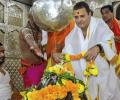
'If Rahul wants to pick up the sacred thread where his 'daadi' left it, especially when the BJP, which reduced his party to 44 in 2014, claims monopoly over Hinduism, it's smart politics.' 'Why cede your Gods to your rival?' asks Shekhar Gupta.

With DMK's M K Stalin coming into his own, and the rival AIADMK too leaving no space for third parties, Tamil Nadu will remain a Dravidian stronghold for a long time, says N Sathiya Moorthy.

The BJP cobbles up the numbers to stake a claim to form a government in Imphal. But ruling the restive state won't be easy, says Chitra Ahanthem.

'The Congress shall have to take some brave-tough decisions to give a new social face to the party and its leadership composition,' says Mohammad Sajjad.

Kiran Bedi tells Amberish K Diwanji reasons for her optimism about change in the political sysatem.

'We have made no effort in recent years to build a national opinion on Kashmir amongst political parties.' 'At least we should speak as one country.' 'It has been a failure of our foreign policy that we have not been able to convince world opinion that something needs to be done about Pakistan.'
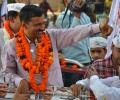
Perhaps Arvind Kejriwal got it right when he described the party as Shivji ki baraat. In other words, without the pejorative sense associated with it, a ragtag. New, and new to the business of government, it is faltering, notes Mahesh Vijapurkar.
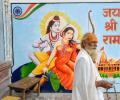
More than 25 years after the Babri Masjid was destroyed, another generation proclaims its commitment to building a Ram temple.

AIADMK's Jayalalithaa won three assembly by-elections from her hospital bed. However, the DMK heir's decision to disempower second-line satraps, who were running personal fiefdoms in their districts, and his fresh approach, could prove beneficial in the next polls, observes N Sathiya Moorthy.
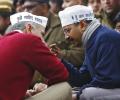
A party of newbies which had anger as fuel and hope in its own capability to work wonders suddenly finds itself not only in government but put on fast forward by everyone. These are heavy burdens for a fledgeling party, to perform under a microscope. Transparency is what they promised, and they are in a glass house now, says Mahesh Vijapurkar.

'The mandals and politicians are trying to project that this is against somebody. We are not against anybody. We do not want the celebrations to stop. It has to happen, but do it in a civilized way.'
